TPrivate alpha

Multi-thread yourself.

Own the expertise in your AI conversations, fan it out across your work, and compound it over time.

Every day you work things out with coding agents: how a project should be built, what you decided and why, how you like things done. Then the conversation ends, and next week you explain it all again to an agent, oftentimes even in the same conversation. Like a monk before the printing press, you copy the same pages by hand, over and over.

Tred is a new, old type of tool: a printing press for your context, the context on your computer and in your conversations. It keeps what you settle, in your own words and linked to where you said it, and hands it to the next agent. What you know stops starting over and begins to compound.

Join the waitlist

Already a tester? Open the testers’ page

The context monk

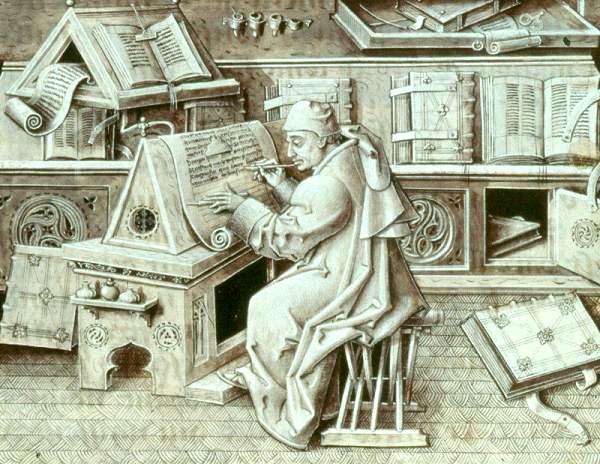
A medieval scribe, Jean Miélot, copying a book by hand at his desk, surrounded by open books.
Don’t be a context monk.

Jean Miélot copying a book by hand, painted by Jean Le Tavernier around 1450. One copy, one reader, months of work.

The trouble with context

Context engineering is a chore

Context engineering today is a chore. You paste the same background into every new agent, and try to remember which conversation held the decision you need.

So you trade speed against accuracy: brief the agent properly and lose the time, or skip it and get work that ignores what you already know. Nobody should have to make that trade.

You should be able to say something once and have it reused, and what you know should compound. There are no good tools for that yet. Tred is the first version.

How it fits together, on the facing pagebelow.

the same page, again

How it fits together

  1. Context

    Everything that can inform the work

    today your conversations · next folders, documents and drives

  2. Your conversations show what you chose and corrected
  3. A context product · How I run evals

    Decisions, corrections and examples from three projects, each with its source

    kept current, for agents to search

  4. Too much to read, so a page on top
  5. A folio

    I. Test the whole workflow, not the model alone.

    II. Real cases before synthetic ones.

    a page, a checklist, or a skill

  6. Read by
  7. You · Claude Code · Codex · the next one

What it is forThy work should add up

Story I

“Somewhere in those conversations is a substantial account of how I think, but I have few practical ways to recover it.”

The archive becomes a library

two years of chatsthy folios
Before
Somewhere in that pile is how you design evals, how you write, why each system is built the way it is. You will never read it again.
With Tred
Tred reads all of it on your machine, sorts it by project and subject, sets aside the noise, and proposes folios: your methods, with the conversations they came from.

Why it works the material already exists. Tred does the reading; you only judge what it found.

What it is for

Story II

“I don’t want to spend my evenings maintaining a personal knowledge base.”

Yesterday's work, kept by morning

yesterdayby morning
Before
It vanishes when the chat ends, and next week you work it out again.
With Tred
Each night Tred reads the finished day and offers what is worth keeping. You keep or skip each with a tap, and the folio it belongs to grows.

Why it works you review while the day is fresh, in seconds, and your judgement is what makes a folio worth reading. Nothing to write, nothing to tend.

What it is for

Story III

“A week later, I find myself explaining much the same things again.”

One folio, every shape

a briefa checklista skillthe source How I run evals
Before a call
You read it as three lines, and decide.
For an agent
It becomes a checklist or a skill, with the earlier corrections that show what you mean.
When asked why
You open the exact conversation behind the line.

Why it works the brief, the checklist and the skill come from the same reviewed lines, so they never disagree, and every line carries its proof.

What it is for

Story IV

“We are no longer being mined merely for our labour; our expertise, artisanship and judgement are being extracted, too.”

Yours, wherever you work

on thy own machineany modelany harness
Before
What the old tool remembered stays with the old tool's company.
With Tred
Any model or harness reads your folios through Tred, and you decide what each one may see.

Why it works models come and go every few months. Your folios are files on your own machine, so what you know outlives every tool.

Want this for your own work? Join the waitlist.

How expertise compounds

The wheel turns

Every conversation with an agent ends with something learned: a decision, a correction, a better way to do the thing. Usually that is where it ends.

Tred spots it and asks you once. You confirm what matters with a tap, and the next agent begins from there. That agent learns something new, and the wheel turns again.

Turn by turn, what you know grows into folios no single conversation could hold, and every agent you open starts further along than the last.

Thou art the judge. Nothing counts until you confirm it, and every line traces back to your own words.

The wheel

IIIIIIIV thyfolios You work with an agent Tred spotswhat you settled You confirm it, in a tap The next agentstarts from it

Each turn of the wheel leaves something behind.

The larger idea

Thine own intelligence

Almost no one can build a chip factory or train a frontier model. Those belong to a handful of companies, and we pay to use them. But the models grow more alike every year, and what makes one useful to you is what you bring to it.

That context you make yourself, every working day. Today it is lost when the chat ends, or kept by whoever runs the chat.

Tred is personal context infrastructure: your understanding kept, sourced, revised and put to work, on your own machine. Mainframes belonged to institutions; the personal computer let people decide what computing was for. AI deserves the same turn.

Of personal AI

Personal AI

THE MODELClaude · GPT · Gemini · thine own, one dayTHE HARNESSClaude Code · Codex · OpenCodeTHE AGENTwriting, testing, fixing thycontext

Models change. Harnesses change. Agents come and go. Thy context stays, and it is thine.

The road

The road

  1. I

    Today · in private alpha

    Thy own book

    Your archive and each new day become folios you review, in every shape you need, on your own machine. The four stories show it.

  2. II

    Next

    A shared shelf

    Colleagues share the folios that help, or set different approaches side by side. New people and new agents start where the team already is, without one institutional memory owning it all.

  3. III

    Later

    A mind of thine own

    What you kept can teach a model adapted to your experience and the way you work. Personal computing for the age of AI: the means of your own work, in your own hands.

The private alphaTred

Join the waitlist

Tred is in a small private alpha, for people who work with coding agents every day and want what they know to add up. Leave your email, and we will write when there is a place for you.

Leave thy email

Already a tester? Open the testers’ page

Questions, ideas, or a story about how you work with agents? Write to work@timleers.com.

Set in IM Fell English and Alegreya. Made by hand, with agents, in the book it describes.